


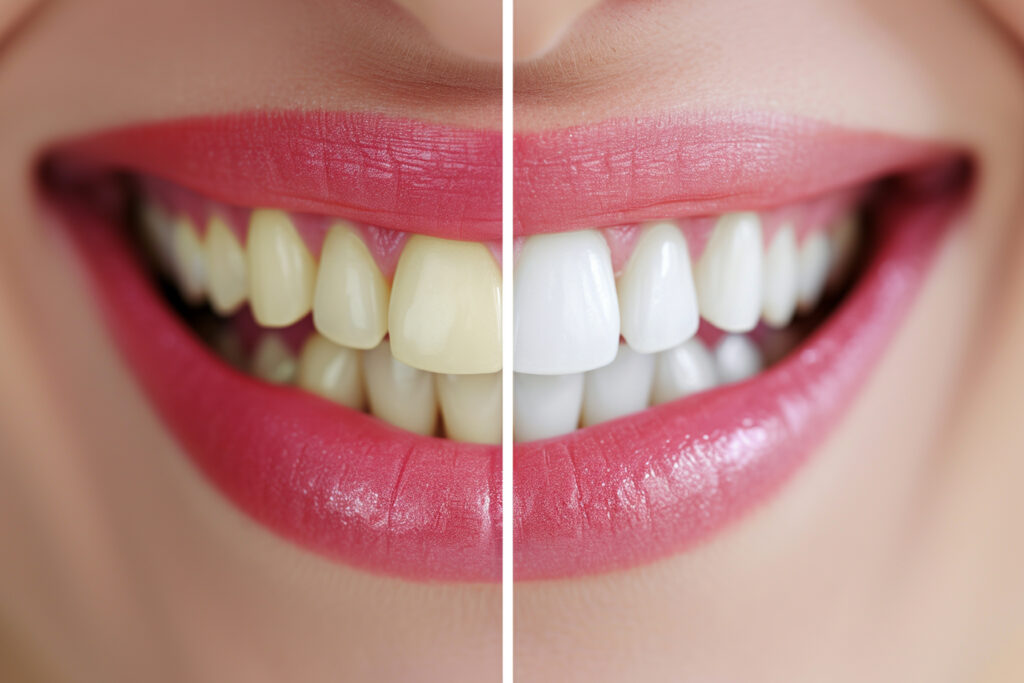
We see it every week in our North Scottsdale studio. A patient arrives for a consultation, frustrated and disillusioned. They have spent hundreds, sometimes thousands, of dollars on the latest drugstore whitening strips, high-concentration boutique gels, and even “laser” whitening treatments at high-volume dental hubs. Despite their persistence, their teeth remain a stubborn shade of gray, yellow, or dull off-white.
The marketing for most whitening products suggests that a brighter smile is just one more “kit” away. However, the reality of dental biology is far more complex. If you have been chasing a white smile without success, the problem isn’t your lack of effort. The problem is likely that your staining isn’t on the surface of your teeth, it is inside them.
At Smile Esthetics, Dr. Mariana Conant takes a diagnostic approach to tooth shade that goes far beyond a simple bleaching tray. To achieve a truly radiant smile, we must first understand the “why” behind the discoloration.
The Limits of Chemical Bleaching
Most whitening products, whether over-the-counter or professional grade, rely on hydrogen peroxide or carbamide peroxide. These chemicals work by penetrating the porous surface of your enamel to break down organic stains from coffee, tea, wine, or tobacco. This is effective for “extrinsic” staining, the kind that sits on the outer layer of the tooth.
However, as we age, our enamel naturally thins. Enamel is the hard, white, translucent outer shell of the tooth. Underneath that shell lies the dentin, a denser material that is naturally yellowish or grayish. As your enamel wears down over decades, the darker dentin begins to show through. This is “intrinsic” coloration. Because the color is coming from the internal structure of the tooth, no amount of surface bleach will ever reach it. Attempting to “over-whiten” thin enamel often leads to extreme tooth sensitivity without ever achieving the desired brightness.
When “White” Isn’t the Only Goal
In many corporate dental offices, the solution to dark teeth is simply a higher concentration of bleach. This “more is better” philosophy is a hallmark of high-volume dentistry. But a beautiful smile isn’t just about the shade of white; it is about the “value” and “translucency” of the tooth.
If you look at a natural, youthful tooth, it isn’t an opaque block of white. It is layered. It catches the light. It has a certain “depth” to it. When high-volume clinics place generic veneers or use aggressive bleaching, they often produce a “flat” white look that appears artificial. At Smile Esthetics, Dr. Conant focuses on “Micro-Esthetics.” We want your teeth to look bright, but we also want them to look alive.
Advanced Solutions for Persistent Staining
If chemical whitening has failed you, it is time to look at boutique restorative options that address the root cause of the darkness. Depending on your specific dental anatomy, Dr. Conant may recommend one of several high-precision alternatives.
1. Ultra-Thin Porcelain Veneers For patients with significant intrinsic staining or thinning enamel, porcelain veneers are the gold standard. We use porcelain that is as thin as a contact lens, allowing us to mask the dark internal color of the tooth while preserving as much of your natural enamel as possible. This provides a permanent, stain-resistant brightness that bleach simply cannot match.
2. Artist-Grade Composite Bonding If only one or two teeth are discolored, perhaps due to a past injury, bonding can be a beautiful, conservative solution. Dr. Conant hand-sculpts a high-end resin over the tooth to mask the darkness and blend it perfectly with your surrounding teeth.
3. Internal Bleaching Sometimes, a tooth turns dark from the inside out after a root canal. In these cases, we can perform “internal bleaching,” where the whitening agent is placed inside the tooth for a short period. This targets the source of the stain directly, often restoring a single dark tooth to its original brightness without the need for a crown.
A Personalized Shade Strategy
At a high-volume hub, you are often handed a generic whitening kit and sent on your way. At Smile Esthetics, your shade strategy begins with a one-on-one evaluation. Dr. Conant looks at the thickness of your enamel, the health of your gums, and the specific undertones of your dentin.
We also consider your “Cosmetic Harmony.” We don’t just pick the whitest shade on the chart. We look at the whites of your eyes and your skin tone to ensure your new smile looks natural and sophisticated. Our goal is for people to tell you that you look “refreshed” or “glowing,” rather than asking who “did your teeth.”
If you are tired of the cycle of ineffective whitening and are ready for a permanent, professional solution, it is time to look beyond the bleach.
Stop guessing and start glowing. Your smile is unique, and your whitening strategy should be too. Experience the difference that 26 years of aesthetic expertise can make in your confidence.
Contact Smile Esthetics today to schedule your personalized “Beyond Whitening” consultation with Dr. Mariana Conant.
Schedule Your Executive Smile Consultation with Dr. Conant today.